Your 240Hz Monitor Is Lying to You (Part 1 of The Latency Tax)
Part 1 of 3. Refresh rate is one link in a chain of about eight, and it is rarely the slow one. Here is where your milliseconds actually go, from finger to photon.
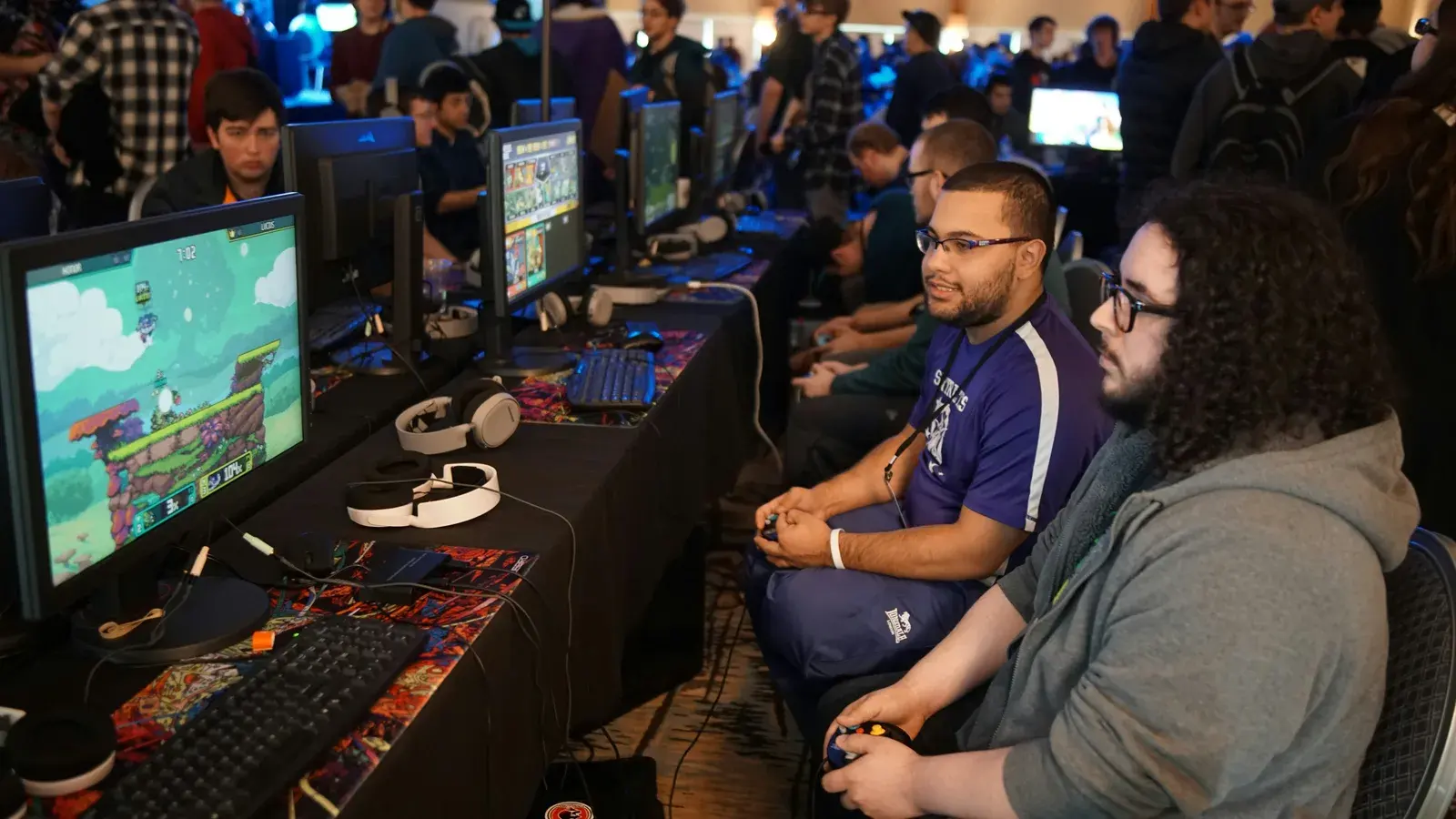
You bought the 240Hz panel. You are still getting beamed by someone on a 144Hz office monitor and a mouse that came free with a keyboard.
This is not a skill-issue article. It is a chain article — because end-to-end latency is a chain of roughly eight links, your monitor is one of them, and it is very rarely the slowest.
The chain, in order
From the moment your finger moves to the moment a photon changes on the panel:
| Link | What it is | Typical size |
|---|---|---|
| 1. Switch actuation | The mouse switch physically closing | Sub-millisecond, but debounce adds more |
| 2. Debounce | Firmware waiting to confirm the click is real | 0-8 ms, wildly variable by mouse |
| 3. USB polling | How often the mouse is asked for its state | 8 ms at 125Hz, 1 ms at 1000Hz, 0.125 ms at 8000Hz |
| 4. OS + input stack | Windows handing the event to the game | Small, but not zero |
| 5. Game engine tick | The game processing your input | Depends on engine and frame rate |
| 6. Render + queue | Frames waiting in a buffer to be drawn | Often the biggest single number |
| 7. Cable + panel scan-out | Getting the frame onto the screen | 1000/refresh-rate ms, plus panel processing |
| 8. Pixel response | The pixel physically changing colour | 1-8 ms depending on panel tech |
Look at link 6. Render queue is the one nobody buys hardware to fix, and it is regularly the largest number in the chain. A pre-rendered frame queue that is three frames deep at 60fps is adding roughly 50 ms — more than the entire rest of the list combined.

Why refresh rate feels like the answer
Because it is the number on the box, and because the maths for it is simple: a 60Hz panel shows a new frame every 16.7 ms, a 144Hz panel every 6.9 ms, a 240Hz panel every 4.2 ms.
Going 60 to 144 removes about 10 ms and feels enormous. Going 144 to 240 removes about 2.7 ms and feels like almost nothing, because by then you are chasing a link that is no longer the bottleneck.
Every upgrade has a diminishing return, and the return diminishes fastest on the link that is already the fastest one in your chain.
The frame rate part that actually matters
Here is the thing people get backwards: frames per second affects latency even above your refresh rate.
A game running at 300fps on a 240Hz monitor is producing a fresher frame for each scan-out than a game running at 240fps. You do not see all of them, but the one you see is newer. That is why competitive players run uncapped or high-capped frame rates on panels they are technically "wasting".
The exception: if your GPU is at 100% utilisation, the render queue fills, and you get the *worst* of both worlds — high frame rate, high latency. Capping slightly below your maximum achievable frame rate keeps the GPU under full load and the queue short. Our monitor settings guide and Windows optimisation guide cover the settings; Part 2 covers the mistakes.
Where network sits — and where it does not
Network latency is a separate chain. It does not add to your input latency; it decides how out-of-date the server's view of the world is when your input arrives.
Both matter, and confusing them wastes money. Buying a 360Hz monitor will not fix a 90 ms ping, and a routing service will not fix a three-frame render queue.
There is a third possibility people skip straight past: something running that you did not install. Our sister site's how to tell if your PC has malware is the cheapest check on this whole page, and it is the one worth doing before you spend anything.
If your problem is genuinely the route rather than the render, that is a different tool — we cover one in our GearUp Booster ping review, and there is a fuller writeup in GearUp Booster review 2026. If it helps on your route, GearUp Booster is the one we cover. It will not do anything at all for local input lag.

The honest upgrade order
Notice the first three cost nothing. That is the whole point of this series: most people buy link 7 to fix a problem living in link 6.
What actually improves your aim
Milliseconds are real and they are also not the biggest variable in whether you win a duel. Consistency of grip, sensitivity that does not change every week, and a desk height that does not make you drift are worth more than the gap between 144Hz and 240Hz for almost everyone.
We covered the physical side in the desk setup that ruins your aim, and the fit side in best gaming mouse by grip style.
Q: Is 240Hz worth it over 144Hz? A: It is a real improvement of roughly 2.7 ms per frame interval, which is much smaller than the improvement from 60Hz to 144Hz. If your render queue and frame cap are not sorted first, you will not feel it.
Q: Does higher FPS reduce input lag even above my refresh rate? A: Yes. A higher frame rate means the frame being scanned out is newer, even if you never see most of the frames produced. The exception is when the GPU is pinned at 100% and the render queue fills, which increases latency again.
Q: Will a lower ping fix my input lag? A: No. Network latency and input latency are separate chains. Ping decides how stale the server view is; input latency decides how long your own machine takes to react.
*Some links on this page are affiliate links, marked as sponsored. Where a partner pays us, our view of the product does not change. 18+ where gambling content applies.*