Sensor Resolution, Motion Delay, and USB Polling Rates in Modern Optical Mice
The sensor physics of DPI resolution vs USB polling rates: motion count quantization, sensor motion latency, and CPU thread utilization.
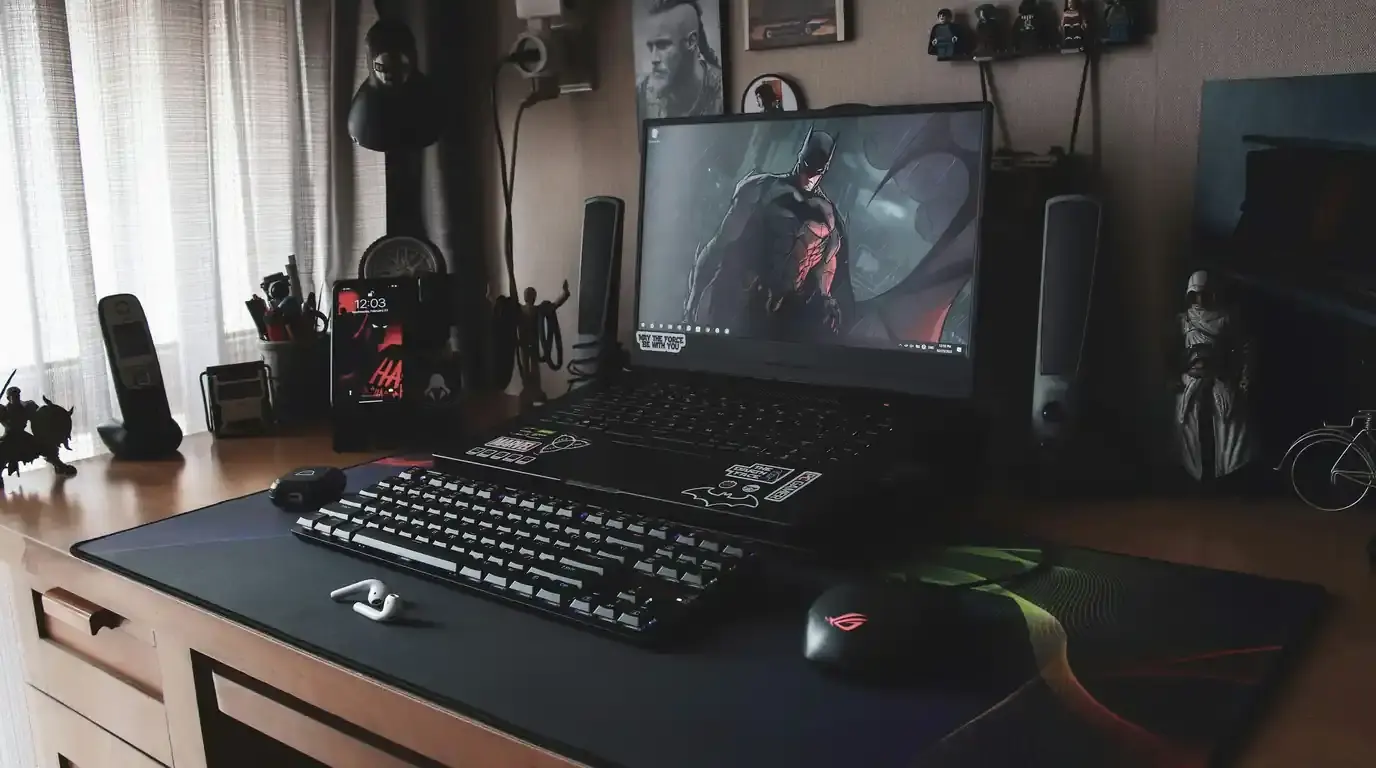
Within the competitive gaming community, settings for mouse sensor resolution (DPI or CPI) and USB polling rates are frequently debated. Many players continue to use legacy settings like four hundred DPI because their favorite veteran professionals used them years ago. However, modern optical sensor architecture operates under different physical parameters than legacy optical sensors. Understanding how sensor resolution and polling frequency interact helps you configure your hardware for minimal latency and maximum micro-aim precision.
Sensor Physics: Counts Per Inch and Motion Quantization
An optical mouse sensor is essentially a miniature high-speed camera that captures thousands of surface images per second. An integrated digital signal processor (DSP) compares consecutive surface frames to calculate directional displacement vectors, which are converted into motion counts:
- DPI (Dots Per Inch) / CPI (Counts Per Inch): The number of discrete positional counts the sensor reports for every physical inch of movement across the mousepad surface.
- In-Game Sensitivity: A software multiplier in the game engine that determines how many degrees your in-game camera rotates for each incoming mouse count.
- Effective DPI (eDPI): The true physical sensitivity of your setup, calculated by multiplying hardware DPI by in-game sensitivity.
Why Low DPI Increases Motion Latency on Micro-Adjustments
When you move your mouse at four hundred DPI, the physical distance required to trigger the first motion count is one four-hundredth of an inch. At sixteen hundred DPI, that distance shrinks to one sixteen-hundredth of an inch.
| Hardware DPI Setting | Physical Travel per Motion Count | Micro-Movement Sensor Latency | Diagonal Path Smoothness |
|---|---|---|---|
| 400 DPI | 0.0635 mm travel required | Higher initial motion detection delay | Coarse, stairstepped diagonal tracking |
| 800 DPI | 0.0317 mm travel required | Moderate initial motion detection delay | Balanced tracking granularity |
| 1600 DPI | 0.0158 mm travel required | Minimal initial motion detection delay | Smooth, continuous diagonal tracking |
| 3200+ DPI | 0.0079 mm travel required | Ultra-low delay, but may capture hand tremors | Highly granular, requires clean sensor tuning |
When making micro-adjustments to hold a narrow angle in tactical shooters, a sensor set to four hundred DPI must physically travel four times further before sending the very first position update to the operating system compared to sixteen hundred DPI.
USB Polling Rates: One Thousand Hertz to Eight Thousand Hertz
While DPI dictates spatial resolution, the USB polling rate determines the temporal frequency at which your computer requests position packets from the mouse over the USB bus:
- 1000 Hz Polling: The computer queries the mouse every one millisecond.
- 4000 Hz Polling: The computer queries the mouse every zero point two five milliseconds.
- 8000 Hz Polling: The computer queries the mouse every zero point one two five milliseconds.
Higher polling rates smooth out the visual micro-stutters that can occur when rapid mouse movements are viewed on ultra-high-refresh-rate monitors running at three hundred and sixty or five hundred hertz.
To explore how high-refresh monitors interact with input latency, check Your 240Hz Monitor Is Lying to You (Part 1: The Display Chain).
CPU Overhead and Game Engine Compatibility
Operating at four thousand or eight thousand hertz polling rates places substantial interrupt demand on your central processor:
- Hardware Interrupts (IRQs): Every incoming USB packet triggers a CPU interrupt that must be processed by the operating system kernel.
- Thread Contention: In CPU-intensive games, thousands of interrupts per second can cause micro-stutters if the CPU cannot balance game engine threads and USB polling simultaneously.
- Game Engine Bottlenecks: Some older game engines are not optimized for high-frequency input packets and may experience erratic camera stuttering during fast mouse sweeps.
To diagnose potential CPU bottlenecks in your system, review PC Bottleneck Guide: How to Determine If You Are CPU or GPU Bound.
How to Test and Configure Your Setup
You can optimize and verify your mouse settings through a structured configuration process.
- Step 1: Open a sensitivity conversion calculator and record your current eDPI (e.g., 400 DPI multiplied by 2.0 in-game equals 800 eDPI).
- Step 2: Increase your mouse hardware DPI to 1600 in your mouse companion software, and adjust your in-game sensitivity to 0.5 to maintain your exact 800 eDPI.
- Step 3: Run an open-source polling rate verification utility (such as MouseTester) to confirm your mouse delivers stable polling intervals without dropped packets.
- Step 4: Test in-game micro-aim adjustments on target bots to confirm smooth tracking without cursor jitter.
Q: Does high DPI cause cursor jitter when clicking? A: If you set DPI excessively high (such as twenty thousand DPI), the sensor can register tiny muscular tremors in your fingertips when clicking. Sixteen hundred to thirty-two hundred DPI offers the optimal balance of low motion latency without jitter.
Q: Will switching from 1000Hz to 8000Hz polling immediately improve my aim? A: The difference in input latency between one thousand hertz and eight thousand hertz is under one millisecond. While it delivers smoother motion on extreme refresh rate displays, proper mouse grip ergonomics and consistent crosshair placement remain far more impactful.
Configuring your mouse for optimal performance means choosing a modern resolution like sixteen hundred DPI to eliminate motion quantization delay while ensuring your PC hardware can comfortably sustain your chosen USB polling rate.